Showing posts with label Linsdell. Show all posts

Wednesday, 21 January 2015

Analysing Music Videos: Meet Me Halfway; Next Year; Changing of the Seasons

Hello and welcome to yet another of these blog posts! It's quite sad that I haven't been able to post up anything non-school related thus far, however, don't fret; something will eventually come! For now, my most recent assignment was to analyse three different videos. The videos that I chose were Meet Me Halfway by the Black Eyed Peas, and Next Year and Changing of the Seasons, both by one of my personal favourite bands - Two Door Cinema Club. I hope you will enjoy reading what I've picked out of these videos!

Meet Me Halfway by Black Eyed Peas


Meet Me Halfway is a 2009 song by the American hip-hop group the Black Eyed Peas. It features all four members of the band who all perform as the narrative of the video unfolds – as that is what it is, a narrative video which tells a story. Though perhaps the story is not directly relevant to the lyrics of the song, it is a story nonetheless; from Wikipedia, it is written as follows:

The video features the members in different parts of the Solar System. The video opens on a road in the middle of a desert panning up to the cosmic sky which shifts to scenes of each of the members singing in different locations of space: Fergie lies in the middle of a lush, green jungle, apl.de.ap levitates on a desert planet in nomadic clothing, will.i.am rides an elephant on a moon of Jupiter and Taboo glides around the Sun in a spacesuit. Apl takes out a map and will.i.am uses a compass to search for a path to the other members. After a while, will.i.am finds a dial which reveals gateways for each of the members to go through. All the members use a stargate and turn into shooting stars, and land on the planet (presumably Earth), with the road in the middle of the desert. This is the first video of the album that does not end with the phrase "The E.N.D.”

The song itself can be interpreted in many ways, however the majority of people perceive it to relate to a couple who are going through a difficult time in their relationship. They are both trying to do the best they can for each other but it is not quite working out – so the song is about how to recover their relationship and how they are planning to solve the problems that they are experiencing. The video in a way does reflect this, as all of the members ‘meet halfway’ in the its narrative – they all travel some distance, however small, to get back together again and be a successful and understanding couple. This therefore means that while the video is quite different, it still conveys the same key messages – making it conform to the convention that music videos are an extension or an expansion of the lyrics and the song playing over the top of it.

This video is one which also employs a lot of the traditional techniques for music videos. For one thing, it is partially animated – the use of CGI and special effects is present throughout to create specific elements of the video such as the ‘stargates’ which all of the band members travel through to be reunited. Even the surroundings are also animated to an extent; the starry skies, the scenery, and the backgrounds – no doubt either created with a greenscreen effect or else a purely digital medium. As well, there is a focus on all of the artists as they are singing – no doubt miming – along to the lyrics of the song, which is also a convention where the artists appear to be singing when actually they are not; they are just acting and performing under direction by the production team. Finally, there is quite a significant focus on the different camera angles. The shots used greatly vary from close-ups to long-shots, even sometimes involving sweeping shots that move across the screen, and these very clearly present the video in a very smooth and enjoyable fashion that make people want to watch the video the whole through. Combined with great video quality in terms of definition and also cinematography, this is a video which ties together effective elements and conventions to present, very well, the song Meet Me Halfway.

From this video, a strong impression of the artist (Black Eyed Peas) is given. This is again a new style of video for them to produce, meaning that it shows them to be very innovative and creative, and the animation and technical elements of the video also show them to be very adaptable and unique. Although they are commonly described as a ‘hip-hop’ group, they are clearly capable of a lot more, and they are capable of producing different sounds and kinds of videos which suit those sounds. As a group as well, they are shown to be proud of their work and keen to show it off in videos of varying styles that embody their creative spirit. They look like they love and enjoy what they do and are keen to continue doing it.

The reason why I chose to analyse this particular video was because I liked the style of it – not necessarily directly relating to the lyrics, yet retaining meaning. I would like to emulate this in my own music video as the ideas that I have are not necessarily directly relating to the song, but do have enough relevance that people will recognise the message that I am trying to convey through it. I will not aim to re-create the extravagant effects etc. as I do not have the technology available to me to do so – but I will incorporate some of the more basic elements to make the video that I create as successful as I can be.

Next Year by Two Door Cinema Club


New Year is Two Door Cinema Club’s third single from their 2012 album Beacon. The video for it is comprised of footage from a concert of theirs in Dublin on the 19th of January 2013 (as stated in the video description on YouTube) – making it a concert, or ‘as live’, style music video. These kinds of videos are typically either partially or wholly composed of concert footage – which is what is present here, with the entire video featuring footage from this one concert in Dublin in 2013.

Due to the fact that the video is based around concert footage, there are no links to the lyrics or the song whatsoever – barring the fact, of course, that the performers who feature in the video are also the people who sing the song, and that this is a concert where that song was played. The music video is carefully put together to ensure that the lines being sung match up with the lyrics of the song – almost creating a ‘lip sync’, as if the song playing is a live recording. The various parts of the concert are spliced together into one full video, with several recurring shots and concepts appearing throughout. The video returns to, for example, the lead singer Alex Trimble in close-ups and extreme close-ups regularly to show him singing some lines of the song into the microphone, and shots from the back of the stage and opposite the stage showing the crowd and the cluster of balloons floating above them are common. These recurring ideas throughout show, easily, that this was a video filmed all in one night and that this performance has been recorded live from the stage in Dublin. These recurring ideas also help to convey that the band is both passionate about what they do and fun-loving; they are seen to be enjoying themselves up on the stage, and their focus, too, on the fans in the crowd and as they are entering show that they are an extremely fan-oriented band who love to involve their crowd as much as themselves in the creation of a work such as this music video.

The shots mentioned above with regard to Alex Trimble are just the beginning of the shot variations used throughout this video; there are extreme close-ups right up to long-shots and everything in-between. All of these different shots allow viewers to get a fully-comprehensive look at the stage and the performance and enjoy the spectacle that is unfolding before them. These shots are also key in conveying, as said above, the emotions of both the performers and the crowd members; it becomes very easy to see how much they are enjoying themselves, and how much of an experience a live performance is for those who attend one.

A number of visual techniques are employed in this video in order to make it appealing to watch – the first is a constant blue and black ‘hue’ over the video which gives it a consistent visual colour spectrum. Though it would ordinarily appear to ‘dull’ the bright colours of a video of this nature, it is actually effective at accentuating the sheer size of the crowds watching the band perform and also gives it a tolerable appearance which can be watched in any lighting. It is also effective at cutting the bright flashing effects of the strobe lights at the concert – potentially enabling more people to watch the video in itself as those with epilepsy or other conditions triggered by such visuals will not be affected.

Other than that obvious video effect, there are also specific effects and features which appear throughout. The first of these are jump-cuts and minor blur transitions to effectively link the clips together. In some places these are very appropriate to use as they match the beats of the music and the visuals change accordingly when the tune takes a turn, making the video dynamic and fun. As well as these, slight filters (including blurs and focusers) are used which make shots, though similar, individual and unique in their own way. These filters also help to draw attention to specific points of the video, for example where the balloons are floating on the crowd – those are automatically what you focus on as they are the only distinguishable objects under the filter. Similarly, variations in clip speed are used to this same effect – to draw attention to certain aspects of the video, particularly clips which involve members of the crowd. Having these clips slowed down allows viewers to see every small detail of their actions; whether they’re dancing, laughing, cheering, and so on. It really helps to emphasise how the attendees of the concert are feeling and how much of a good time they are having watching one of their favourite bands (no doubt) playing live right in front of them.

I chose to analyse this music video as it is a song by the same band as I am planning to make a video for – Two Door Cinema Club. In addition, the style of song is very similar to the song I have chosen to make a video for (Changing of the Seasons) and I wanted to see what styles of video have been made for such examples of their music before. The concert, or ‘as live’,  music video style was not actually what I was expecting from the band given some of their other videos – however, it has been greatly useful to watch and analyse as it has shown me that they are a very creative and diverse band who dabble in a lot of different genres and styles. Even their music is diverse, even where it seems similar, so this will definitely be something that I bear in mind when I make my video. I will aim to emulate and re-create the vision of Two Door Cinema Club that has been portrayed here; that they are enthusiastic, keen to perform, have a good relationship and influence on their fans, and that they have a creative spirit which will keep on evolving and developing in order to bring their fans quality music and quality music videos that they will enjoy.

Changing of the Seasons by Two Door Cinema Club


Changing of the Seasons is the eponymous track for the newest instalment in the Two Door Cinema Club music library, their Changing of the Seasons EP, released in September 2013. The single also features on the re-release of the band’s second studio album, Beacon, as the twelfth and final track. On the EP (digital download), the original tracks ‘Crystal’ and ‘Golden Veins’ also appear, as well as the Monsieur Adi remix of Changing of the Seasons. These tracks are different on the CD and vinyl releases, however.

This video would probably be considered a hybrid of two styles: narrative and concert/as live. This is due to the fact that there is a story being told throughout the video, but also throughout there are interspersed clips of the band performing up on a stage in front of a crowd. This is therefore a video which combines the two types to create something bigger – for the effect of showing both their creativity and innovation for the story, and their dedication and level of success in the form of their live performances. The clips of them performing do almost look concert-like; however, it equally looks like these clips were staged (literally) for the purpose of the video. Either way, they are still present, making the video a hybrid of two different styles.

This is quite an interesting video with regard to its narrative, as it is unique with respect to the other two. The narrative of the video itself does not appear to have any direct relevance, again, to the lyrics as from hearing the song and then from watching the video, it is possible to come up with completely different interpretations. The song itself, for example, is held to be with regard to a failed relationship that has come to an end, with neither party really knowing what to do as a result other than be absolutely certain what they had is now over. An alternative interpretation is that the song does not focus on a romantic relationship at all, instead perhaps a platonic one or a friendship – and this is the interpretation that I will be playing upon in my own music video for this song. I feel that the romance element is a little obvious, and whilst it may be the true meaning of the song (which has not ever really be confirmed) it is also one that I can play on – and hopefully create an effective music video about for the band. This is also something which I can empathise with, meaning that on an emotional level I will no doubt be able to influence that particular effect on viewers who may have also gone through the same or a similar situation.

Although the lyrics may not appear to directly link to the video, however, the combination of the two is able to influence people to develop their own interpretations of what the song is about. The video therefore works as an extension of the lyrics, to symbolise some lines in a vague way which can then be interpreted by viewers. This is, of course, a convention of music videos – that they do actually work to enhance and expand upon the listening experience. This video is just one take on what the song means; anyone is able to develop their alternative ones, including me, as I will do in coming assignments.

Where the other two videos I have looked at cut straight ‘to the chase’ and start immediately with the song, the existing music video for Changing of the Seasons has an introduction in excess of a minute. This introduction sets the scene for the remainder of the video by introducing the idea of a press conference with the band; the rest of the video then largely focuses on the chaotic events which unfold in this single space between the band members and the reporters and journalists.

One interesting part of this introduction is the reporter asking “are you surprised at the band’s level of success considering...” – with him, on ‘considering’, gesturing at the band as if to say ‘considering how you are and what you’ve been producing’. This almost appears relevant to the band themselves in reality; and as such this is the line which ultimately creates yet another interpretation of the video – that it is about the band’s decline in popularity following their change in lyrical and auditory style. They have adapted their music and updated it slightly, which is held to have lost them some credibility and fans; could this video therefore be about how their fans are feeling like they are losing a band they truly love, and that this band does not seem to care about their interests – or even vice versa? This is a very intricate and interesting idea but no doubt one that is thought of only by a minority of people, hence making it unlikely that the video and song is about this anyway. Another interpretation, which in a way links to the previous one, is that from watching the video alone but with the lyrics in mind, the song could potentially be discussing the end of the band (which is unlikely since they are still reportedly making their third album as I write this) and the video dictating their actual slow demise. Again, this equally unlikely, however.

When the song kicks in roughly a minute in, the sub-narrative of the video is revealed – the concert side to it. The majority of the video focuses on the events and chaos unfolding in the conference room and following it their escape into a taxi, but the other half shows them performing to fans – perhaps in a concert, perhaps in a theatre, it is never made completely clear. This dual narrative is quite an interesting feature as it is not usual for music videos to ever go beyond one clear story, if any; it makes the video unique and with a much more intricate premise, as expected of Two Door Cinema Club who generally put in huge quantities of effort in both their music and its presentation.

With regard to the visual presentation of the video, there are a number of points to raise. First of all, the entire video is in black and white. This is relatively unheard of nowadays considering the technology we have; therefore it was done with meaning, and done with purpose. Perhaps the two colours could symbolise the two-sided nature of fame – the glamour and then the constant attention – or any number of things, such as the two parties in the relationship/friendship, or the two aspects of a fanbase (the idol and the fan). Potentially it could also be symbolic of how obvious things are, and have been – this is again up for interpretation, though, as any aspect of music videos are.

Secondly, the shot types are again greatly varied – as they are in any of Two Door Cinema Club’s videos. Much like in the video for Next Year, there is a range between extreme close-ups (arguably) and long-shots, with every kind of shot in-between. This variety helps to give a complete picture of the narrative and also ensure that viewers can see what is happening clearly and easily. The shots are sharp and focused to directly affect how viewers watch the video. Close-ups on the band members and also the ‘reporters’ shows their contrasting appearances and mannerisms, too; the band members hide when the chaos erupts, whereas all of the media representatives fight between each other and cause mayhem. Equally, though, the band is shown in the sub-narrative to be quite mischievous, with some of their previous antics shown to us. This helps to create a wholesome image of the band as well, who look to both have a professional and a troublemaking side to them – which can be both frustrating and endearing for fans it seems, as also presented within the video. In addition, some of the shots are again slowed down to accentuate key information and the key elements within them. This is exceptionally evident due to the monochrome colour scheme of the video – and works well to make key parts of the video stand out and be cinematographically brilliant.

The final element is the fact that, as with the majority of videos (especially by Two Door Cinema Club), the three band members are shown to be miming or at least lip-syncing with the audio. During the editing process the filmed clips and the audio have been very clearly carefully aligned so that it appears as if they are actually singing the song – though it is obvious to tell that they are not due to the pristine audio quality (a giveaway if ever there was one). This is of course a common feature of music videos as it directly creates a link between the artist and the song, showing who it is who is behind it. Often where an artist is not featured in their own video, it is easy for viewers to become confused and assume that an actor or similar is actually the artist of the song. This is therefore not a problem here as it is clear who the band members are and that it is their song. This video therefore is used by the band to promote their own image – their individual image – and to demonstrate their creativity and innovative ideas yet again in the form of yet another style of video. They prove themselves to be an all-rounded band with skills and talents in many different areas, including acting.

The obvious reason why I chose this music video to analyse is that this (Changing of the Seasons) is the song that I will be attempting to make a music video for. I personally do love the existing video for the song; however, it has never embodied my personal interpretation of the song whatsoever, nor my friends’, so I would like to re-create this video in the hope of making it more applicable to my own thoughts. This video is certainly going to influence the style I go for, perhaps going for a mixture myself of narrative and another element if I am capable of incorporating it. The dress style of the band members is also very important and I may use this to influence how the cast members dress in the video.

Both of the videos by Two Door Cinema Club which I have analysed, Next Year and Changing of the Seasons, both have a visual quirk that I will probably not be able to re-create. In contrast to most videos, which appear at a maximum definition of 1080p, these videos appear much slimmer – I do not have a camera which is capable of filming at this size or orientation, so this element will most likely not be exactly replicated. It is, however, something interesting to note as perhaps during the rendering stage something may be done involving a black screen and a PIP (picture-in-picture) effect on it at an alternative resolution to their real videos, to at least re-create this idea in some form.

Well, this concludes my analyses of the three music videos! I know they were long (what post of mine on this blog isn't?) but I hope that they were enjoyably long, and perhaps usefully long if you, the reader, are a media student yourself looking for some inspiration. There's no bibliography this time due to the fact that it's just purely me interpreting the videos - but the links to each individual video are below.



Wednesday, 12 November 2014

Me and My Movies: Superhero Films

Hello! I'm back again for my third post (well, my second REAL post) on this blog! I'm here to write another assignment for my BTEC Media course, this time titled 'Me and My Movies'. This assignment focuses on film audiences and how they interact with films before, during and after release, and because it's my favourite genre ever, I'll be focusing on superhero films. My aim is to explain different audience theories and ideas by applying them to various films within the genre.
Enjoy!


Introduction to the Genre

Promotional Poster
for Captain Marvel
Superhero films are still some of the most popular (and some of the most abundant) films released in the 21st century. The genre's creation was almost instantaneous following the release of the first superhero comics in the 1940s - but back then, these ideas were often adapted into serials for young children rather than into the blockbuster movies that we see today. Adventures of Captain Marvel is credited as the first serial of this kind, being aired in 1941, and after this followed many other serials including Batman (1943), Captain America (1944) and Superman (1948).

In the subsequent decades, the popularity of the genre severely declined. It was only in 1978, when the first major big-budget superhero feature film (
Superman, directed by Richard Donner) was released, that the genre rose to prominence once more and recaptured the attention of the world. Since then it has thrived, with some of the film industry's biggest film companies such as Marvel and DC rising to fame. Funnily enough, it is these two companies that I will be discussing later in much more detail.

It is a well-known fact that superhero films are perhaps one of the most successful combined branches of the sci-fi and action genres to exist. These films are known for their good music and scoring, their fight and chase scenes, their violence and gore (where appropriate) and even some developing romances. But why is this? And why do audiences become so invested with what is going on in them?


Pre-Release: How Are Audiences Involved?

Before a film, any film, is even released, there are many ways in which audiences can become involved with it. Film-makers ensure that this is possible in order to maximise the successes of their productions. Some of the biggest methods are detailed below, but other, smaller ones include focus groups, questionnaires and surveys, reading blogs and embedded adverts.

Avengers: Age of Ultron
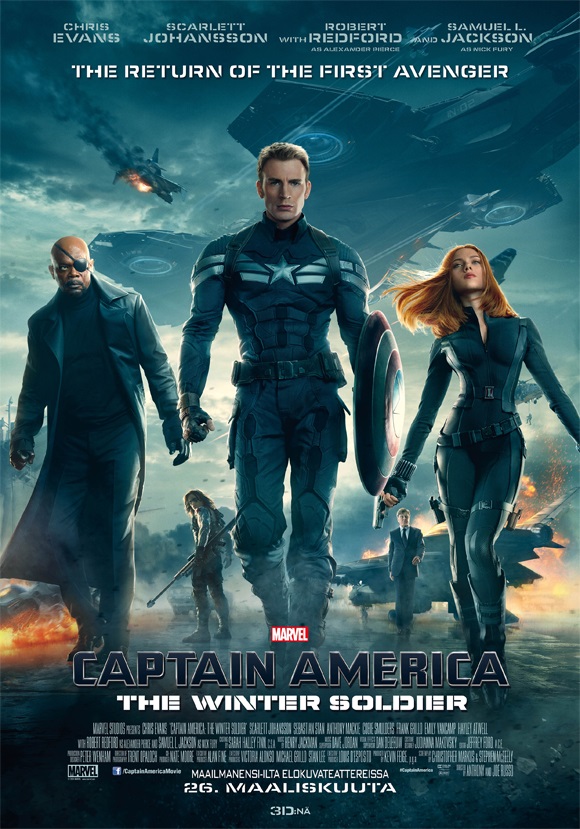
One of the most prominent and obvious ways for audiences to get involved with a film is through their watching of a trailer or some short clips from the film, released as teasers for the full production. Potential fans, if they like the look of the trailer, may ‘share’ it on their social networks or discuss it online, such as in the YouTube comments section if the trailer is uploaded to YouTube; this is therefore  active involvement before the film has even been released,  as they are being motivated enough to share their thoughts and views about the trailer further. Three superhero films with released trailers at the moment are Man of SteelAvengers: Age of Ultron and Disney's Big Hero 6; all of these films’ trailers have been well-received by critics and the public as a whole, creating a positive ‘hype’ which may, in turn, inspire more people to go and watch the films through the positive responses being conveyed. Due to the fact that both Age of Ultron and Big Hero 6 are both still upcoming, responses (especially positive ones) are even more important, widely promoting it and further increasing the possibilities of full-cinema audiences on the box office weekend.

Captain America: The
Winter Soldier
Private advance screenings are also a common method for professional film critics (and even sometimes casual ones!) to become involved with a film ahead of its full release. Those who attend have the opportunity to watch films before the general public and write reviews to try and publicise the good quality (or not, in some cases) of the film that they have just seen. An example of a professional review that has recently been written about a superhero film is this article in The Guardian about Captain America: The Winter Soldier. Though released online after the film's general release, it is still a good example of the kinds of reviews which are often written before the release date - comprehensive and clever, but not giving too much away. The premiere screenings of films are often also used to this effect, with a wide range of fans and non-fans alike attending to see them and then share their opinions afterwards. Potential fans, reading these reviews and opinions wherever they appear, then formulate their own opinions of whether they think the film that they have just read about will be good or not, and will make a more informed decision as to whether they will go and see it. This is therefore an even more active method of involvement before a film's release – attending an event and writing reviews, which then provoke even wider involvement. One day I'd love to be able to attend a screening like this - but something tells me that might just be a dream to chase rather than a reality!

Perhaps one of the most prolific forms of involvement with films before they are released, done again by members of the public, is the use of social networking sites or forums online to discuss the film and by doing so improve public awareness of its release. Although not a superhero film, the third instalment in the Hunger Games film quadrilogy, Mockingjay: Part 1¸is due out later this month and has already been widely discussed online despite its limited marketing campaign. Speculation is still relatively high, but now that posters and the main full-length trailer have been released, discussion about these has also begun with impressive results. This form of involvement is so effective and well-known due to the various social networks which are utilised by fans and potential fans alike as part of it. As examples of sites used for discussion purposes, Twitter is predominantly used for passing comments and for having short, spontaneous conversations, whereas Tumblr is, on the whole, a base for the more dedicated fans to pass around their ideas and predictions and for widespread, detailed discussion of elements of the film.

McDonalds' 'Happy Meal'
logo in 2014
Finally, promotional campaigns (including 'viral marketing') can also do great things for boosting a film’s success upon release if they are done properly. Viral marketing is a method of attracting greater public involvement with the film, prompting the audience to try and find out facts and film exclusives for themselves as well as waiting for the official announcements. Good viral marketing involves events, interviews and press conferences, as well as merchandising and minor tactical publicity links (e.g. within fast-food chains and restaurants). It ultimately can help to raise public awareness and also to involve potential fans in the process of the film’s release. Some aspects of campaigns can be targeted specifically to different age groups – films for younger children, for example, could be merchandised by the placement of small action figures in children’s fast-food meals, such as McDonalds’ ‘Happy Meals’. Finding these toys, the children may then ask their parents to take them to see the film when it is released if they think that the toys look like exciting characters to learn about and view on-screen. This sort of tactic is famously by the Pokémon Company when a new Pokémon film is released – the most recent example being Genesect and the Legend Awakened.

As mentioned above, 
Age of Ultron is Marvel's closest-to-release upcoming superhero film. Over the past few months tension and excitement has been building up, and quite recently at San Diego Comic Con the biggest announcements about the film and (on a wider scale) Marvel's line-up of future superhero films have been made, causing fans to go absolutely crazy. Marvel is well-known for its successful viral marketing - and this film is no different. The first step of their viral marketing for the film was to get fans to piece together the promotional poster, composed of eight separate character-oriented pieces. These were released slowly, limited to two per day, building trepidation and excitement for the full art. Other marketing measures, including released clips (such as this one, and this one on a different YouTube channel, giving Marvel's reach an even wider scope), promotional images and set pictures (here), news coverage of official speculation (here) and even cast interviews as mentioned above (Chris Evans' interview from SDCC is here) are still being used now, giving fans have a lot to think about and discuss online before the film is released on May 1st 2015. Social media is integral to a good viral marketing campaign and it is easy and obvious to see that Marvel as a company is aware of this, updating its Twitter page, Facebook page and YouTube channel regularly.

Where Audiences Watch Films and Media Types


Audiences are able to watch films in a variety of places, and through a variety of means. Obviously the most common places for people to watch films are at the cinema on the big screen or at home when the DVD or blu-ray has been released, but there are others, such as on YouTube, through illegal downloading and on streaming services such as Netflix, Hulu, BBC iPlayer and on-demand services.

At the cinema, a large number of people can get together to see the film and share a community experience of seeing it. Friends and families often go together to be able to socialise and have a fun time – and ultimately to relax from the stresses of life that they are experiencing. Particularly at screenings of superhero films, from the audience, you often hear people gasp, screech, moan and laugh in unison as the film plays, as lots of people have the same realisations, annoyances and exhilarations at the same time as others who are seeing the film with them. The effects and visuals used in superhero films are usually better-suited to the larger screen and the bigger speakers, as they are more atmospheric and higher-quality. It also means that audiences can appreciate the quality and content of the film more, as it is easier for them to see and they can take in the whole experience on a much higher level. Usually many of the audience members will share interests and a common liking of the film – and if the film is in a series, such as the Marvel Cinematic Universe (MCU), it is even likely that fans of any previous films have returned together to see what the next instalment has to offer. This is how films ultimately generate ‘fandoms’ – huge collections of fans who come together to bond over what it is they like, and sometimes even go as far as to deeply involve themselves in the fictional worlds, writing their own ‘fanfictions’, creating their own ‘fanfilms’ and designing their own ‘fanart’. These fandoms are hugely integral to the successes of some of the biggest superhero films out currently, including Marvel’s The Avengers, the Marvel cinematic universe as a whole and DC’s Batman series, due to the publicity and ‘hype’ which they generate. A film with a large fandom, or film series with large fandoms, are almost guaranteed to be more successful than those without, as everyone in those said fandoms is likely to go and see any upcoming productions, therefore guaranteeing a large amount of visitors – and thus a higher chance of a box office success.

DVDs and blu-rays, as mentioned before, are the other common method of viewing films that people use. They can be played using specialised players, in laptops, in some gaming consoles (such as the PlayStation 4 and Xbox One) and in computers – making them a highly popular and universal method alongside digital downloads and rentals. They can be used in either individual or in group situations; they can be watched alone for personal enjoyment, together with friends to socialise, or with family members as a bonding experience. This means that DVD viewings are not just limited to fans – others can also be a part of the viewing experience, willingly or not. Again, fandom mentality and the existence of collectives is a huge part of the success of the DVD and blu-ray format; huge groups of people are motivated to buy the film in one of these formats after seeing it and enjoying it, allowing for endless replay value for a (relatively) small amount of money. Fandoms promote the sale of DVDs and eagerly await the release dates, perhaps even organising small parties for the films to be watched again communally. Film clubs and groups also endlessly benefit from the existence of DVDs and blu-rays, as it means that a huge number of existing films can be discussed as well as the ones currently being shown in cinemas and on television. This success exists throughout every genre, but in the superhero genre especially; it is very common to find film enthusiasts within this field excitedly posting about the upcoming releases, promoting the films and ensuring that as many fans as possible are aware.

The final three methods which I mentioned earlier I shall combine into one single paragraph, as they all involve the same premise – digital viewings, without the need for any physical product or movement. YouTube is the biggest video-sharing website on the internet, and often, even though mostly illegal (with the non-illegal exception films being those in the public domain), people will upload films to the site so that they can be viewed by anyone who searches for them. This is mostly for the benefit of the individual, as it is most likely that a single person will search for a film online to watch it themselves, though it is a particularly successful viewing method in educational environments such as schools, colleges and universities. This is therefore one of the most limited of ways in which superhero films are viewed, as they are not very educational unless used in classes such as media studies (media-ception right here...!), film studies and English language for analysis. Illegal downloading is very much the same as the above – primarily used by individuals to watch films at home, and educational establishments to access content without the need to have to pay. Finally, streaming services. These have to be paid for by the user, and often have a fixed monthly fee in exchange for access to as many films (or a large set number of films). These again are methods which bring together huge numbers of fans and allow fandoms to pursue their interests – by having the films available to watch at any time, people can easily catch up on anything that they’ve missed and then discuss and converse afterwards about what it is they have watched. Due to the vast number of superhero films on the market, this is perhaps one of the most popular viewing methods after the cinema and DVDs and blu-rays, as people do not have to spend a lot of money going to the cinema to see each individual film or on buying each individual disk set – they can have the films all in one place to be viewed anytime. Perhaps the most prominent disadvantage of this, however, is that not all films are added due to copyright and other restrictions, and it can take a long time even after the release of the DVDs and blu-rays for the films to be made available for streaming.

Where audiences watch films often changes how they are viewed, with each style of viewing corresponding to one of the three main media types: primary, secondary and tertiary. Primary media is that which requires your undivided attention, such as a film or a TV show series – and as such, it is received primarily in places such as cinemas and theatres where the audience’s only purpose is to see that work as it plays out. In terms of films, the effects will be exciting, bold and bright, trying to capture and retain the attention of those watching them. The plotlines will also be considerably more complex, as a lot of information has to be packed into a very short space of time – meaning that the audience must keep watching to follow the story. Secondary media is more relaxed, such as a soap opera or a radio show, which plays in the background on the TV or the radio as an accompaniment to other tasks such as cleaning or cooking, predominantly when at home, though some kinds of secondary media can be enjoyed in other places – such as music through earphones, downloaded films on public transport (where it is being used to just pass the time etc) and YouTube videos being watched on the go. Secondary media is not the main focus of attention, but it is being enjoyed all the same – and doesn’t require as much thought, as a vague grip on the action is all you need. Finally, tertiary media is the sort that audiences are not even aware of the fact that they are viewing – such as advertisements on the side of a bus or in shop windows, or pages in something printed, such as magazines or newspapers. This is media that you are unlikely to knowingly pay attention to, subconsciously taking in the information rather than having to think about it. This is due to the overwhelming amount of tertiary media in today’s world; we obviously know that it’s there, but we don’t pay as much attention to it as we think as there is simply too much, which would take too much time.

How Are Audiences Affected By Watching Superhero Films?


Whilst watching films, audiences are renowned for their active involvement. Many sympathise with characters, pay close attention to the storylines, and overall form a judgement about each aspect of the film which composes it (e.g. the visual effects, the music, the lighting). Outside of the viewing itself, individuals may respond throughout, perhaps commenting on their social networks about what they're seeing or talk to those around them, either in-person (if they are there) or through digital means such as texting, phone calls, emails and other apps like Snapchat, Instagram and Skype.


Denis McQuail is one theorist who has developed ideas regarding the purpose of films and what audiences use them for. His research largely contributes to the above ideas about what they are used for – for pure entertainment value, for social interaction, to ‘escape’ from reality, and for other purposes such as finding out information and educational research and value. In particular his research has now developed into varying strands, one of which could arguably be said to be the ‘uses and gratifications’ model, which speaks about what audiences get from films and the benefits they receive from them.


Superhero films, in this respect, are no different, and his findings are applicable to them as much as any other genre. Why do people watch superhero films? Their content is often so unrealistic and surreal that many would not see the point, especially if they are the kind to try and find some kind of ‘value’ in all films made. However, others will see that they can be viewed for enjoyment, for a sense of community, and for more, such as escapism and maybe even, to some degree, sexual satisfaction. In terms of ‘uses and gratifications’, the same superhero film may be able to gratify the different needs of different individuals. Different needs are associated with individual personalities, stages of maturation, backgrounds and social roles, and all of these are certainly seen to play a part when considering how fandoms develop – different age ranges, genders and sexualities band together over different films. Superhero films such as those made by Marvel may not only be able to fulfil the entertainment needs of some people, but also the needs for escapism of others – proving an unrealistic world that people can become deeply involved in as to ignore the troubles of their own lives and instead focus on the brilliant stories and occurrences within the fictional one.

A superhero film which can explain this concept very well is Marvel's The Avengers; this film is all about a team of very different people who come together to save the world from Loki. This film gives out positive messages about accepting the differences of others, caring for each other, and working together towards something good rather than fighting each other and getting nowhere. The 'team' spirit of the film is also very inspirational - getting across to young people good moral values such as friendship, responsibility and resilience. Audience involvement and the provocation of audience empathy for the characters are two of the most obvious signs of a successful superhero film. If the audience wants to the heroes to succeed in saving the world (or whatever it is that they are doing) then they have been successfully motivated by the film to invest in its world and the people they are watching. Developmental factors also seem to be related to some motives for purposeful viewing; Judith van Evra, for example, argues that children may be particularly likely to watch TV in search of information as they grow, hoping to explore their world and everything going on in it.


A second theory is the hypodermic needle theory, which suggests that the mass media has a huge and powerful influence on audiences, causing them to think in certain ways. It was first thought of in the 1920s and implies that the media 'injects' ideas and ways of thinking into passive individuals, who then all respond in the same way to whatever they are told - there is no individuality. In the past, examples of this have included an audio dramatisation of H. G. Wells' The War of the Worlds; when broadcast, many of those listening were actually fully convinced that martians were invading Earth - clearly showing the profound effect the media can sometimes have. This theory has long since been discredited, however, as it has a very limiting perspective on the responses audiences give to media. As such, it hardly applies to superhero films - as it is now clearer more than ever that what we are witnessing is fiction, and that nothing occurring on-screen is actually a representation of what is going on in real life. One superhero film that could, under this theory, potentially have an effect is Captain America: The First Avenger, purely because of the advanced fictional technologies it shows. If not educated on such manners, potentially people could believe that the treatments and medical science exhibited are actually being used on real people - thus the ideas could be 'injected' into the individuals.

Another audience theory which has been developed is the two-step flow theory, which refers to the active involvement of audiences in the communication process between the mass media and individuals. It says that we as humans are more influenced by each other than the mass media which we experience - hence the creators of 'opinion leaders' who direct our thoughts on specific topics after sharing their own opinions with us. This is therefore a 'two-step' process (hence the name): from the media to the opinion leaders, and from the opinion leaders to the individuals. 
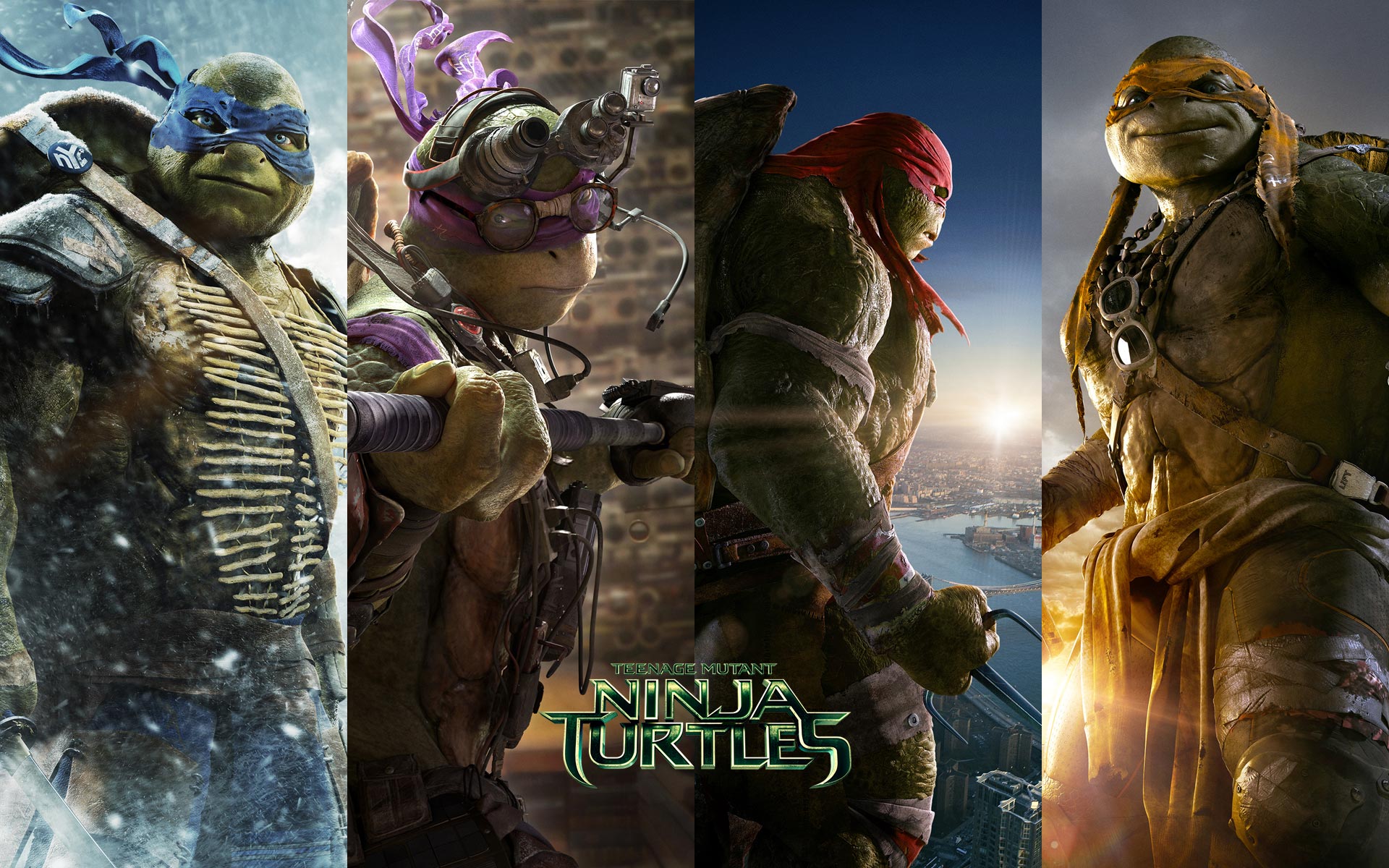
In terms of the film industry, and in particular with regard to superhero films, this process refers to how a small group of individuals hear the plot of a film (e.g. if they heard the plot of the upcoming Guardians of the Galaxy 2) and then share what they have found out with their friends. Those friends then go on to tell their friends, and from there the process continues without end, with each person's group of friends learning from them what that person's friend has told them beforehand. Once the film is in the cinemas, this process begins anew; the original few people share their opinions on the film, which then prompts their friends to go and see it and afterwards share their opinions - and so on. The scope of the process is unlimited, as inevitably there will always be someone who has not already heard the information before. Because of this, often people's opinions on films can change over time; the 'flow' can reverse or change direction. This is particularly evident with regard to the recently-released Teenage Mutant Ninja Turtles film. Initially, it seemed to look like a huge disappointment from the clips and teasers which were released, but one seen in one full film in the cinemas, the reviews have actually been largely positive.


The final two theories that I am going to mention work quite well together. There is the encoding-decoding model devised by Stuart Hall, and the preferred readings theory. The encoding-decoding model, in its most basic form, is the concept that the producers of media texts 'encode' meanings and ideologies into them (the 'preferred readings' of the producer), and then the audiences and individuals 'decode' meanings from those texts - and not everyone takes the same meanings from the same text. This also means that many people do not take the preferred reading of the text as perhaps intended by the producers - they instead either modify or completely change the messages. So essentially: if people watch enough films and take messages from them, in many instances, the messages encoded into texts will be completely different to those
decoded by audience members - leaving quite a huge gap between what the producers were trying to convey and what the audiences actually got from the text.

These two theories ultimately relate to how audiences 'read' texts - how they decode the information within them, and whether they follow the preferred reading, whether they adapt it, or whether they change it entirely. A rather humorous example of a film which can be taken in two very drastically different ways is Spiderman. On the one hand, it is the story of a mutated teenager who was bitten by a spider and suddenly transformed into a superhero. On the other... could it actually just be a metaphor for the drastic nature of puberty? Just have a think about that. Factors which help to contribute to these assumptions, both of this film and others in the genre, include the plotlines, sub-plots, music, acting quality and character expression.

How Can Audiences Be Involved With a Film After Its Release?

Finally, the last thing I would like to address is the ways in which audiences and individuals can respond to films after they have been released. The most obvious is the fandom experience which I have repeatedly referenced throughout. These huge groups of fans often come together online to create works (such as fanfiction and fanart on websites such as Fanfiction.net and DeviantART) that tie in with their favourite films, filling in any gaps in the plot and even creating new lines of thought that other fans can experience and enjoy. This is particularly relevant when considering 'shipping' - the act of wishing for two characters to be together in a friendship, a platonic romance or a full-on romance. Fanfictions and fanart pieces are often created with the intention of changing the film 'canon' to suit the liking of their creators better - such is seen for all superhero films, including Guardians of the Galaxy; the 'ship' of Peter Quill and Gamora is particularly prominent and popular, with hundreds of works appearing within the first week of the film's release.

Large-scale conventions are often held which film buffs attend - with the superhero geeks and nerds rising to huge prominence. Events such as the San Diego Comic Con, the London Film and Comic Con and MCM Comic Con all regularly involve 'cosplay' (costume play) and prompt thousands of superhero fans to dress up as their favourite heroes for the events. The gatherings can also be film-specific; the Star Wars film series, for example, has a huge following with thousands (if not tens of thousands) of fans coming together to celebrate. These conventions often host a wide array of events, including (if big enough) signings with cast members, talks and panels with the creators of the films, competitions and a merchandise store.

On a smaller scale (yet still on a huge scale) other concepts which I have previously mentioned are also applicable to the post-film release period. Social networking, for example, is a huge part of the ways in which fans can be active after the films have been released. Marvel and DC are continually updating their social feeds, as well, not only provoking new conversations between fans but also sustaining old ones, such as the discussion of 'plot holes' and open endings - and, more often than not, those awful cliffhangers that you just don't know what to do with. Twitter, Tumblr and Facebook (on the film's pages) are again the main sites used for this purpose, attracting thousands of people and involving a wide variety of people from all ages, sexual orientations and genders.

And last but not least, fans may invest in writing lengthy reviews of the superhero films, in buying merchandise if they enjoyed the films, and in searching for any online extras and add-ons to the films that they can enjoy. These three pastimes serve to fill in the void until the next film as well as the previous acts (if there is going to be a next film, which in most superhero universes there inevitably will be). Anyone is able to write a review and buy merchandise, and often fans can be seen walking the streets in t-shirts, hoodies and costumes related to their favourite shows or films. Even bags and backpacks can now be dedicated to films - maybe check those who are walking in front of you or around you sometime, and see what they're wearing or carrying!


This concludes my analysis, therefore, of the purposes of superhero films and how they are received and interpreted by audiences. I hope that this (rather lengthy) post has been enjoyable and useful, and that you may come back for more!

Until next time!

  • This piece of writing is for Unit 26 of Edexcel level 3 BTEC Media (Film Studies).
  • A bibliography of all of the sources and sites I have used to write this article can be found here.

Wednesday, 22 October 2014

Old Films For New: Dr. Jekyll and Mr. Hyde


Dr. Jekyll and Mr Hyde
(1920)
The Strange Case of
Dr. Jekyll and Mr Hyde
(2006)


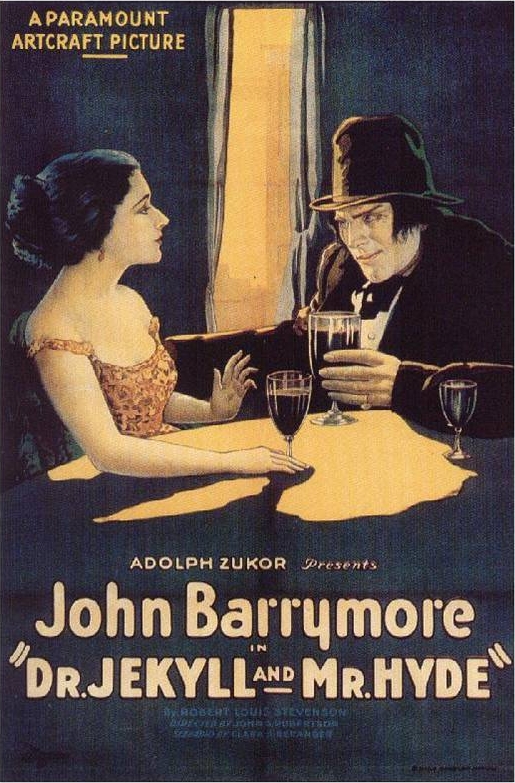
For my first post on this blog, I am going to be comparing the 1920 film Dr. Jekyll and Mr. Hyde to its remake, released in 2006, titled The Strange Case of Dr. Jekyll and Mr. Hyde. This latter film uses the full title of Robert Louis Stevenson's novel of the same name, released in 1886, which both films were ultimately based upon. Ironically, this second film is also the one which disregards the original story the most, altering the characters and events almost completely to suit a modern audience.


Introducing The Strange Case of Dr. Jekyll and Mr. Hyde

To be able to truly understand the two film adaptations of Stevenson’s novel and why they are different to each other, it is important to look at the context of their production. The production context of a film is, to put it simply, the various background elements which influence the film-makers to create the film in a particular way – such as the available technology at the time, the studios and producers responsible for making the film, the laws and regulations present, the popular trends – and so on. All of these things contribute towards the end product, as the film-makers draw inspiration from around them and use it to create a film that partially, if not fully, reflects the time of production.

In the case of these two films, of course, the existence of Robert Louis Stevenson’s novel is also a hugely important contextual factor to consider. Published in 1886, it shocked the public with its horrifying content and was read and enjoyed even by those who had never previously been interested in reading works of fiction. In the novel, Dr. Henry Jekyll invents an elixir which temporarily transforms him into the horrible Mr. Edward Hyde – a manifestation of his most ‘evil’ desires. Though effective for a while at separating the two sides of Jekyll’s personality, it soon leads to chaos as his transformations into Hyde become unstable and, as Hyde, he begins attacking and murdering others. Realising that the only way to stop Hyde is to die, Jekyll composes a letter explaining the entire situation to his friend Utterson and then seemingly goes to commit suicide.

This is the story which Stevenson created in 1886 – but how did these two films show it on the big screen? And why did they do it in such different ways? This is what I’m now about to explore.

The Contextual Factors

It would make the most sense, in my mind, to start at the beginning of both films – in their pre-production stages. Considering this, the most obvious contextual factor to consider is the period in which both films were made. Dr. Jekyll and Mr. Hyde was a silent and black-and-white film made and released in 1920 in the Unites States, at the time of the Edwardian era in England and a growth of economic prosperity due to the success of the First World War for all of the victorious nations. The Unites States was on the brink of the start of one of its most famous and remembered periods: the “Roaring Twenties”. The Strange Case of Dr. Jekyll and Mr. Hyde, in comparison, was in full-colour and with sound and music audio, made and released in 2005 and 2006 respectively, again in the United States, this time in the middle of the Iraq War which both the United States and the United Kingdom fought in, on the same side, against the Ba’athist party and the Sunni and Shia insurgents. In the same year, the Great American Boycott took place across the United States where marchers protested for immigration rights – something which had been fought for for a long time, being vaguely reminiscent of the various civil rights protests in the United States throughout the 50s, 60s and 70s.

The fact that one film was in black and white and was silent and the other in full colour with audio demonstrates just how far technology has come between the creation times of these two films. We as human beings have hugely developed our industry, and we can now create much more entertaining and intriguing works for people to enjoy. The monochrome nature of the 1920 film meant that some reels, when put together, looked blue or brown on-screen; this sense of age and sheer primitivism is beautiful to enjoy, even now in the 21st century. There is still something special about the oldest films we have in existence, despite the intense and beautiful productions which we can now create. This is the same for the audio.

These were clearly two very different times to be alive in, and the events at the time and the advancements in industry played a huge role in influencing the two films – the 1920 version less so due to the fact that it was intended to directly mirror the events in Stevenson’s novel. The slight contemporary representations in that film are shown by the prosperous lives of the people (Jekyll goes to a party, has lots of money to keep buying the ingredients for the potion, visits his friends whom all wear expensive clothing etc.) and also the locations used for the film; rather than being in Victorian England, as in the novel, they are presumably in 1920s America where the film was made, in some of the backstreets of a small village. In comparison, the influences of the time on the 2006 film are blatantly obvious; not only are the buildings much more developed and industrial, making for much more modern settings and locations, there is the presence of armed police and modern technology such as cars, aeroplanes, computers and mobile phones. On top of this, perhaps one of the most prevalent changes between the two eras is shown just by the presence of Tony Todd as the actor of Jekyll and Hyde. In 1920 the core Civil Rights movement had not even started, and African-Americans were certainly no closer to gaining equality in the workplace or in such a high-profile industry as film-making. The laws on African-Americans were that they had to be kept segregated from whites, and could never use the same facilities or go to the same places. This can easily be perceived due to the fact that no ‘black’ actors appear in the film. In 2006, in contrast, civil equality has now fully been achieved and Todd, as someone of African-American descent, is now freely able to work in a career of his choosing. This is a huge contextual factor which influenced the film to be the way it is and to star and feature the people that it does.

The next logical point to focus on with regard to the context of production is the studios who worked on creating the two films; Famous Players-Lasky for Dr. Jekyll and Mr. Hyde and the Motion Picture Corporation (MPC) and Fantastical Cinema LLC for The Strange Case of Dr. Jekyll and Mr. Hyde. For the version of the film that I watched, it was Fantastical Cinema LLC who were credited as primarily creating and producing the film for release in Germany, and as such it is them that I will focus on over the Motion Picture Corporation.

Famous Players-Lasky was recognisably one of the biggest companies at work during the silent era of film, and thus at the time of Dr. Jekyll and Mr. Hyde’s production it was one of the best film companies to work with, due to the fact that it was a composite company consisting of eight smaller companies: Famous Players, Feature Play, Oliver Morosco Photoplay, Bosworth, Cardinal, Paramount Pictures Corporation, Artcraft, and The George M. Cohan Film Corporation. With the president (of Famous Players-Lasky) focusing highly on the integration of production, distribution and exhibition of film into his one single corporation, the 1920 film was easily produced and distributed to the big screen for viewing by audiences. On the other hand, Fantastical Cinema LLC, the production company for the 2006 film, is barely known at all even its country of origin. Having only ever produced three films in total to this day, the other two of which (The Eden Project and Saurian) are TV movies, it is actually incredibly surprising that the film has achieved such a commercial success. The ability and quality of the company is therefore very hard to judge – though certainly with The Strange Case of Dr. Jekyll and Mr. Hyde they appear to have done spectacularly with so little, if any experience. In direct comparison to the Famous Players-Lasky company, though, it is reasonable to say that the quality of workmanship of the 2006 film was lacking in depth and quality despite its professionalism.

Finally, I feel that a point must be made about the directors of the two films and the budgets that they had to work with. From here, I will move onto looking at the films themselves and their content. Amusingly, both directors have the forename John (John S. Robertson directed Dr. Jekyll and Mr. Hyde, John Carl Buechler directed The Strange Case of Dr. Jekyll and Mr. Hyde) but seem to have shared no other traits – when creating their two versions of the story, they took very different routes and made very different decisions.

John S. Robertson first became involved in the film industry in 1915, working with the company Vitagraph. Later, of course, he moved to work with Famous Players-Lasky, remaining a director for their films until he left the industry in 1935 when sound films were growing in prevalence. In total he directed 57 feature films, most of them silent, and yet his most remembered is his rendition of Dr. Jekyll and Mr. Hyde. When directing the film, he stuck very closely to the original story expressed in the novel by Stevenson, adapting it very little to suit the time of production. The only changes he did make were based on the 1887 stage version of the story, directed by Thomas Sullivan and starring Richard Mansfield, and a few contemporary edits that I will mention later on when comparing specific scenes in the film that were executed in drastically different ways. The exact figure of the budget that he was given by Famous Players-Lasky to produce the film is unknown, however it is reasonable to suggest that he will have been given quite a large sum of money due to the wealth and professional level of the company. This will have led him to invest in some of the most technologically advanced equipment and best-quality acting talent to make the film into one of the best in terms of quality and authenticity at that time. Dr. Jekyll and Mr. Hyde depicts Stevenson’s original story and John Barrymore and his fellow actors in the film did a superb job of capturing the innocence of Jekyll, the terrifying and horrific personality of Hyde, and the air of mystery and suspense that the original novel creates.

Now: John Carl Buechler! In comparison to Robertson, he first started in the film industry in 1978. He is not only a director but also a special effects artist, a make-up artist, a producer and a screenwriter, and he has a long history in the horror genre with famous cult names such as Troll (1986), the Halloween series and Friday the 13th Part VII: The New Blood (1988) under his belt. Do you remember that Fantastical Cinema LLC has only ever produced three films so far? Well, he was responsible for the directing of all of them, and made them very successful despite their limited publicity through their company itself. Where Robertson aimed to stick very closely to the original story and concepts of the novel by Stevenson, Buechler completely adapted the story to fit a modern audience and the modern world. He used his knowledge of the horror genre and its conventions to create a thoroughly repulsive film (believe me, the amount of scary scenes and gore in it is unbelievable…) that would induce fear in its viewers, and even managed to incorporate a comedic element in places which could never have been achieved in the 1920 film due to the attitudes of the people at the time and also the grave nature of the subject matter. Saying this, he incorporates more modern issues in the 2006 version as well, making it much more relatable and interesting for modern viewers to watch. Such issues include heart problems, incurable diseases, animal testing, police practice, scientific methodology and, perhaps most prevalently, increasing numbers of major assaults resulting in murder, rape and/or serious harm. The budget for the 2006 film, though not exactly known, has been estimated to be around $750,000 – therefore easily accounting for all of the special effects, complex shots, and technology usage present in Buechler’s film.  Despite these factors, however, the success in the box office was disappointing; only $19,111 was made on its first weekend in cinemas, and the majority of the later money made was from the DVD release as it was rated very lowly and did not receive many good reviews from critics. In that sense, it is like a ‘marmite’ film – one that you either love or hate.

Having considered all of these contextual factors behind the film, I now think it prudent to actually look at the films themselves. 

Comparing the Two Films' Contents

Perhaps the most obvious point to consider about the two adaptations is how they portray the key concepts and events of the novel in movie form. As I said above, the 2006 film, The Strange Case of Dr. Jekyll and Mr. Hyde, ultimately changes quite a lot about the story to suit a modern audience; in contrast, the 1920 film, Dr. Jekyll and Mr. Hyde, closely follows the events of the book, only changing a few names and the circumstances of Jekyll’s relation to Sir Carew (he is set to marry Carew’s daughter, Millicent, who did not exist in the novel, but in the 1887 stage version by Thomas Russell Sullivan starring Richard Mansfield. This 1920 film version used the play's concept of Jekyll being engaged to Carew's daughter, and Hyde beginning a romance with a dance-hall girl.)

Before I go into specific events, however, I’m going to look into the generalities – what is similar between the films and what is different. The first point that I’m going to raise is both a similarity and a difference between both films – you might wonder how that could be, but it’s easy to explain and recognise. In both films, the concept of Jekyll’s two-sided character is portrayed as being a form, or at least a representation of, a multiple personality disorder, or MPD. This is, therefore, the similarity between the two – that they both feature an MPD-suffering Jekyll.

The difference is a little more complicated, centred on the actual portrayal of the MPD in the two films. In Dr. Jekyll and Mr. Hyde, there is a clean distinction between the two different personalities as it is either Jekyll or Hyde on screen, never both. This can perhaps be interpreted as a reflection of Victorian beliefs – that people could only ever be good or evil, right or wrong. This idea is challenged in the 2006 film, where Jekyll and Hyde do both appear on-screen at the same time, due to the fact that Jekyll believes for a time that he is not himself Hyde, and that Hyde is instead an entirely separate person. Hyde therefore appears in the form of a hallucination, born of Jekyll’s own mind, who taunts and insults Jekyll for a large majority of the film. In our modern world, it is one of the most recognisable facts that we can all do good and bad things. The entire 2006 film reflects this, as Jekyll does several charitable deeds to try and make up for the murders and attacks he has committed (albeit unknowingly) as Hyde. The only thing he knows is that he is directly associated with Hyde – he does not realise that Hyde is infact a manifestation of himself. This is therefore the way in which the MPD is portrayed in the modern film – as a modern issue that many of its sufferers sometimes can’t even understand and may not even recognise that they have.

Another difference between the two films is the actual process of taking the drug – in the 1920 film Jekyll drinks the solution from a glass vial, whereas in the 2006 film he injects it directly into his veins using a hypodermic needle. This reflects both the medical knowledge of the time and also the developments of medical equipment; Jekyll, although a doctor in both films, is written and portrayed to only have the medical awareness that his creators at the time had. This small change demonstrates a great many things about the developments made in just a single century – we now take greater care over experimentation, hygiene and medical practice, for example. Jekyll in the modern 2006 film takes the drug after it has been tested on numerous primates – in the 1920 film, he uses it on himself with no testing at all. This is a hugely influential contextual factor that is often overlooked by casual viewers, as in terms of the film it means virtually nothing towards the plot.

In the 2006 film, Jekyll suffers from numerous ‘side effects’ of the drug he has created, suffering from bouts of illness and hallucinations amongst others. The most major side effect is that he is completely transformed physiologically and psychologically into Hyde – and this, that his transformation is a ‘side effect’, is not how it is in the original story, nor the 1920 film. In both of those, Jekyll intentionally creates the drug with the intention of transforming into Hyde, to allow him to act in the untoward way that he is incapable of as Jekyll, as a good-hearted doctor whose reputation can therefore cannot be tarnished. This is therefore another huge difference between the stories of the two films generally; one that anyone should be able to recognise.

The final comparison I am going to make between the two films generally is where they are both set, and during what time period. As I said above, the presumable locations for the 1920 film were in the backstreets of a small American village – the actual setting in the film, however, is the same as the original novel – in Victorian England. This is hugely contrasted in the 2006 film, where the whole film is set in modern America in Hollywood and Los Angeles. This is intended to help bring the film and its concepts to a modern audience, making it easier to understand and associate to Americans, many of whom will never have been to England.

Key Scene Comparisons

Now, as the final part of this comparative post, I am going to look at four key scenes from the two films and analyse them: the exposition at the beginning of the film, the initial on-screen transformation of Jekyll into Hyde, the murders via beating (of Sir Carew in the 1920 film and of the security guard in the 2006 film) and the eventual death of Jekyll. These I hope will demonstrate to you, if you have not seen the films themselves, what they are like and how they are different to each other and also different to Robert Louis Stevenson’s original novel.

The Exposition

So, let’s begin with the exposition at the beginning of Dr. Jekyll and Mr. Hyde. To set up the story, the film opens with some introductory credits – albeit very grainy and blurry ones. The picture quality and clarity is, putting it bluntly, terrible; scaling up the images to our level of definition now makes them quite distorted and maybe even more difficult to comfortably watch. The image often flickers and sometimes even blacks out momentarily until the next frame plays – this is obviously an indication of the poor level of filming technology available back then, and yet, it still does not hinder the actual plot of the film or the level of enjoyment. Now, rather than introducing all of the characters at once, interlude caption cards feature, introducing the characters individually when they first appear on-screen. This tradition continues throughout the whole film, with caption cards featuring throughout to help supplement the acting and explain the events unfolding. Due to the nature of the film (being a silent movie) these are included to try and help those who have not read the book to still understand what is happening.

As each character is introduced, as well, the film aims to make them very distinctive by leaving the focus on them for a period. The black-and-white visuals can often make it much harder for any audience, not just a modern one, to tell the actors and actresses apart. As such, the exposition is quite prolonged – the main concepts of the film (i.e. the idea that your personality could be split, the presence of Hyde etc.) do not feature for almost twenty minutes. Instead, this time is spent establishing the characters and their individual standings in the fictional society being shown. All the time, the soundtrack of the film (traditional-sounding orchestral music, seemingly on a loop until a significant event occurs, where it climaxes and/or changes) is playing, creating a relaxed atmosphere in contrast to the developing horrifying events within the film itself.

The 2006 remake shares only one element with the exposition of the 1920 film: the introductory titles. The titles in this film, however, are much more complex, appearing over clips playing in the background and using fancy visual affects created by the editors and producer. Unlike in the 1920 film, the titles here introduce all of the actors at once by name, but still in order of appearance and, where several actors appear at the same point of the film, importance. The exposition in the 2006 rendition is, on the whole, much more complex to understand anyway – it is not immediately obvious what the point of the opening clips are, and a lot of attention must be paid to all of the details to truly understand what is going on and who is who since the names shown at the beginning are not clearly linked to a particular actor. It is confusing as well because it is not even Jekyll whom we see first – it is Hyde, savagely attacking a young girl and leaving her very much dead and very much covered in blood. From here, Jekyll is introduced a short time later in his laboratory, looking at a news article on his computer. The very presence of the computer is another indicator of how much technology has advanced; reading newspaper articles online has only become this popular over the last ten years or so, and this film therefore easily reflects this fact.

I’ll embarrass myself here and say that, watching the film for the first time, I spent around ten minutes believing one of the laboratory assistants (Poole – the butler in the 1920 film) was actually Jekyll, and that Jekyll was instead the assistant of his. Things could therefore have been a lot clearer had more thought been put into it by the director, as I feel that many may be confused initially as to what is happening and why it is relevant to the plot. A final thing to mention about the exposition in The Strange Case of Dr. Jekyll and Mr. Hyde is that it is much shorter – the film gets to the point faster, and the idea of Jekyll’s experience and experimentations as a doctor are clearly shown. This helps viewers and audiences as a collective, if like me, to ease their confusion and begin to enjoy the actual story more.

The Initial Transformation of Jekyll into Hyde

Of course the initial transformation of Jekyll into Hyde in each film has to be examined – this is the most iconic scene in the entire novel and certainly the most iconic in any and every stage, film or TV adaptation to ever be made. It’s therefore no different here in these two versions of the film.

To shake things up a bit, rather than starting by looking at Dr. Jekyll and Mr. Hyde, I’m going to look at The Strange Case of Dr. Jekyll and Mr. Hyde first. This film was incredibly creative (and also incredibly stupid, in my opinion) when it came to the first transformations of Jekyll into Hyde and Hyde into mutation Hyde. “Hang on, two transformations?” you might be thinking – and yes, there are two. Apparently one of the changes which Buechler made when making the film was to invent a ‘third stage’ to the transformation of Jekyll into Hyde. I’ll go into more depth shortly.

As mentioned before, the initial ‘initial’ transformation is induced by Jekyll injecting himself with a hypodermic needle. The transformation then occurs – Jekyll’s hair instantly grows longer, he increases in size, and his facial features contort and stretch to form a new face which is much more gruesome and ugly to look at. The idea in the novel is that this face is too ‘deformed’ and ‘repulsive’ so look at – and you certainly get this feel in this film, despite the poorly-done make-up and prosthetics. The downside here, though, more than anything else, is that Hyde still looks too ‘human’ to be truly feared in his ‘neutral’ form. Though disgusting and thoroughly disagreeable, he still looks as if he could have gained that face naturally if/when born. Obviously he (Hyde) looks nothing like Jekyll’s (Tony Todd’s) normal face, but it’s still disappointing. Really, this appearance only gets good when the special effects arrive later in the film when the transformation fluctuates between Jekyll and Hyde as the two sides to his personality battle with each other.

Now then... the first transformation into this second ‘form’ of Hyde. Oh, this made me mad – and it’ll probably make you mad, too, as much as it’ll make you laugh – like I also did. Quite simply, the background of it is this; Jekyll has been medically experimenting on apes, using their DNA and genetic information (etc) to further the treatment that he has invented for serious heart conditions. This DNA is found in the serum which he injects into himself, and considering the metamorphic properties that it possesses, he is not only transformed into the ‘middle’ Hyde – but also an angry, cannibalistic, sexually perverted giant ape. Yep, you heard me. He basically transforms into a giant gorilla in the end which rips people apart with its teeth and hands. This is, as you can imagine, a horrid mockery of the original story – it takes the entire mystery and horror of it away, and the humanity behind Hyde’s despicable deeds away. I could even go so far as to say that the entire point of the transformation at all is lost with this, though that could just be me being overly harsh and critical. The actual first sight of this is, as said earlier, at the very beginning of the film. The first time the transformation is completed on-screen, however, is quite late in the film when it is reaching the final climax, roughly around an hour and fifteen minutes in – Hyde is on a rampage, trying to escape the police hunting for him and Jekyll’s efforts to get rid of him.

Let’s return to the actual good film, shall we? Dr. Jekyll and Mr. Hyde in 1920 has its first on-screen transformation of Jekyll following his meal with Sir George Carew, who tells him that you cannot hope to get rid of ‘evil’ desires by shutting them off – you must give into them every so often. This prompts Jekyll to experiment and thus create the elixir which, as a consequence, brings the hideous Hyde into existence. This transformation takes place in Jekyll’s laboratory almost immediately after he completes the elixir – after a few moments of pondering (and most likely worrying, too) he picks up the vial and then drinks it whole. This scene is incidentally where some of the most advanced effects used in the film are showcased – the layering of the two clips over each other, for example: one of Jekyll’s face and the other, in the background, showing his stance when holding the vial. This effect is later repeated as a transition during the transformation, when Jekyll’s fingers age and elongate to become Hyde’s. Another special effect is shown when the convulsions start – it does not begin immediately (infact the first few moments of the transformation relied in John Barrymore’s ability to contort his face), but part of the way through, where a combination of prosthetics and effects supports Barrymore’s changed physiology.

This scene in the 1920 film (which you can watch here if you wish) almost entirely mirrors that in the book, whereas the 2006 film completely changes the appearance and horror of the transformation. I imagine this is one of those moments that ultimately made the 1920 film a great success and the 2006 film less so – though you’d have to watch the scenes for yourself and make your own judgement.

Murders via Beating

Surprisingly, there is one scene in both films which is almost identical, and equally well-done. The scene I am referring to (as you are no doubt able to tell from the subtitle above) is the ‘murder by beating’. In Dr. Jekyll and Mr. Hyde, the unfortunate victim is Sir George Carew – in The Strange Case of Dr. Jekyll and Mr. Hyde, it is the security guard of Jekyll’s laboratory and work building. In both films, Hyde attacks the victim and viciously throws them to the ground. When they are down and unable to get back up, they are clubbed to death using a walking cane and left in a pool of their own blood. This is exactly the same in both films, though the victims are different – which quite shocked me, as I had at first thought that the murder of Donna Carew in the 2006 film had been the ‘murder by beating’ scene. Then I was surprised by the arrival of the scene with the security guard, and thus this comparison was sorted immediately.

The only thing that I would mention here is a related contextual factor – censorship. In the 1920 film, gore and blood and on-screen violence is kept to an absolute minimum. Despite the descriptions in Stevenson’s novel, the consequences are not fully shown due to the restrictions on the film industry and even more prevalently, the media. This limited the screen appearance of the murder, as well – the actor playing Carew, Brandon Hurst, is mostly out of shot and the focus is on Barrymore. The 2006 film is blatantly different to an absolutely horrifying degree. Like I said before, the amount of blood and gore showcased is enough to make your stomach turn and to make you want to turn the film off and never resume watching it. The sheer amount of fake blood that was created purely for the purposes of this film is horrifying, and you get to see every last pint of it splattered throughout the film. (Remember as well that the crimes committed by Hyde aren’t limited to just murder in the 2006 film, as well – he rapes, assaults, blackmails and deceives as well.)

The Death of Jekyll

The very final point I am going to make is with regard to Jekyll’s death in each of the films, where there are again both similarities and differences. In both cases, his death is as a result of suicide; he kills himself in order to stop the antics of Hyde, and restore peace to the world that he has left behind.

The Strange Case of Dr. Jekyll and Mr. Hyde captures one of the most common methods of suicide to exist in modern society – jumping from a building and dying as a result of the impact of hitting the ground. The explanation in the film is that for Hyde to die and not be able to recover from the injuries, the trauma must be both extremely great and also extremely damaging. Jekyll sees the way to achieve this as falling from a block building backwards – and we hear his final line, “it was for my soul”, just before death occurs. This is quite an emotive scene and it makes you feel sad for him – that he had to die, when all he was trying to do was help the world and also solve his own heart problems. Was it all too much to ask, really? Poor Jekyll.

The suicide method in Dr. Jekyll and Mr Hyde is rather antique in comparison to the method used in the 2006 film. Jekyll here takes poison in his laboratory to kill himself, poison which he stored away in a ring he had stolen and that was rumoured to be a ‘death ring’ that a woman once used many years ago to the same end. This result had been foreshadowed throughout the film, even just by Jekyll’s acquisition of it, but also by his continuous wearing of it when considering the reputation it had as an instrument of death. This makes for an almost cyclical plot structure - Hyde both starts and ends in Jekyll's laboratory. The sympathy is again found in the 1920 film, but this time for both Jekyll and Millicent, his would-be wife; Jekyll was again only trying to do what he thought was right and also experience the things that he felt he never could due to his reputation, and Millicent was devoted to him and was worried throughout that something was going wrong and that they wouldn't be able to marry. A truly terrifying story resolved by a truly tragic death.

This therefore concludes my comparison of the two films – Dr. Jekyll and Mr. Hyde of 1920 and The Strange Case of Dr. Jekyll and Mr. Hyde of 2006. I hope that it has been both informative and enjoyable to read, and I would highly recommend that you should watch both films – the 1920 edition more so than the 2006 one.

Thank you for reading, and please comment if you wish to!

  • This piece of writing is for Unit 26 of Edexcel level 3 BTEC Media (Film Studies).
  • Bibliography of references/my reading to be able to write this post: here.